2023: An Alarm Has Been Sounded – But Have We Heard?
The final quarter of 2023 is here. The final 100 days of the year are underway. Looking back to 2023’s early days, finally we see a year of steady, sustainable recovery. Finally, after almost 1’000 days of global border restrictions all regions of the world were open to travel, open to recovery, open to unity, and open to growth.
Finally, a time to prosper. Or so we supposed.
None of us had on our radars the crises that were to follow. As I reflect on this past Northern Hemisphere summer, it is one which will be indelibly imprinted in our memories. It was a summer that showcased the new realities of travel, realities grounded in the global climate crisis that we, as a global community, face today and for generations to come. I wrote about it in August – as it’s becoming tougher to maintain my diplomatic filter. The times then, and now, necessitate both honesty and transparency. They also, critically, demand action.
We now know that July was the hottest month on record, the period from June to August was the Northern Hemisphere’s hottest-ever summer. As temperatures soared, parts of Western Europe sweated through long-running drought conditions. And then there were the tragic wildfires in Maui and Canada, as well as through France, Portugal, and Greece. It was a summer of extremes, and a summer of lessons for the travellers and locals who encountered them.
Then we finished September, and read that for Austria, Germany, Poland and Switzerland, the month was the hottest on record. This in a year already expected to be the warmest in human history as climate change continues to accelerate. And the intensity and suffering hasn’t ended. Spain is currently searing in late summer heat, while across the central USA, the week ahead is expecting a new wave of heatwaves. Heatwaves, in October? On the other end of the spectrum, New York City is bailing itself out of flood levels that have saturated JFK, La Guardia and Newark Airports with over a foot of water in the terminals. The city’s subways seeing water pouring down the stairways while bridges, roads and paths are closed. And it did not stop there, from Vermont to Cape Town and the Himalayas, all were inundated with floods or landslides.
Closer to my home, here in Switzerland, I can see the glaciers evaporating before my eyes, 10% gone, in just two years. So much is changing, so many new challenges are emerging. Terrifying challenges. The climate crisis is only one of them, one that impacts us all. No one is immune to the weaknesses our world is witnessing, weaknesses that are eroding who we are as a global society, community, and economy. We are literally burning our planet, our livelihoods – yet as a collective we remain idle.
At the UN General Assembly days ago Secretary General Antonio Guterres addressed more than 140 world leaders, he too dropped his diplomatic filter, choosing to speak with rawness unfamiliar on such a worldwide platform. His words were searing, and imploring.
Excellencies,
Our world is becoming unhinged.
Geopolitical tensions are rising.
Global challenges are mounting.
And we seem incapable of coming together to respond.
We confront a host of existential threats – from the climate crisis to disruptive technologies – and we do so at a time of chaotic transition.
It was a start to an address warning of an end.
He continued further on to speak specifically of the climate crisis.
We must be determined to tackle the most immediate threat to our future: our overheating planet.
Climate change is not just a change in the weather.
Climate change is changing life on our planet.
It is affecting every aspect of our work.
It is killing people and devastating communities.
Around the world, we see not only accelerating temperatures, we see an acceleration in sea levels rising – glaciers receding – deadly diseases spreading – the extinction of species –– and cities under threat.
And this is only the beginning.
We have just survived the hottest days, the hottest months, and the hottest summer on the books.
Behind every broken record are broken economies, broken lives and whole nations at the breaking point.
Every continent, every region and every country is feeling the heat.
It is clear that to protect the future we must adopt and activate the lessons from the climate change upheavals of the past few months. The immensity of these events, such as fires, heatwaves, floods, over-tourism, a government shutdown, and global warming, will bring new realities to all aspects of our lives.
What does this have to do with us as travel and tourism professionals and practitioners? Why such concern? Have the UNWTO not just released Summertime momentum results to be excited about, their global monitoring has revealed that:
“Tourism demand continues to show remarkable resilience and sustained recovery, even in the face of economic and geopolitical challenges, the UNWTO Barometer showing that:
- By the end of July, international tourist arrivals reached 84% of pre-pandemic levels.
- 700 million tourists travelled internationally between January and July 2023, 43% more than in the same months of 2022.
- July was the busiest month with 145 million international travellers recorded, about 20% of the seven-month total.”
Should we not just be rejoicing the recovery of travel numbers? What do we have to worry about?
Everything. Because one thing is unambiguously clear: storms, heat waves and wildfires are anything but predictable. The cities and communities that travellers long to visit are under threat and consequently they are increasingly building in ways to change their plans on the fly and with it, travel is changing.
With the increasing impact of climate change, certain destinations may become less desirable due to extreme weather conditions or environmental degradation. And with the increasing unpredictability of weather events and natural disasters, travel insurance policies may evolve to provide better coverage for trip cancellations, delays, and disruptions caused by climate-related incidents.
Within TTC we are already helping those guests seeking out alternative locations:
- Destinations that offer more sustainable and climate-resilient experiences,
- Locations with more moderate climates,
- Iconic attractions with less congested sites and mobility arteries,
- Those off-season periods that offer greater value for money and richness of experience, and
- Those times of the year that avoid risk of exposure to extreme weather events,
as well as those that truly make travel matter,
- Engaging more closely with local communities,
- Supporting more directly local economies,
- Gaining more richly local learnings, and
- Making genuine connections with the locals.
The summer of 2023 has highlighted the importance of resilience, responsibility, and disaster preparedness. As did the global pandemic, as did previous economic downturns, as have acts of terror and natural disaster. We need to relook at our strategies, structures, and systems for an increased focus on [DM1] minimising disruptions, maximising confidence, and sustaining travel momentum.
Which is why in November I will meet with our operations teams to ensure we adjust to this new unpredictability, to review and plan for how we need to be structured to expect the unexpected. What are our options?
Operationally, there are many levers we are able to use as powerful tools for building resilience across our businesses and to continue to embed sustainability into the DNA of our brands – both through our guest’s experience and the support we can offer to the communities and locals we visit.
Sustainable travel will become mainstream. It must. Why? Because there is no alternative.
What is the alternative to sustainable wildlife? Extinction.
What is the alternative to sustainable communities? Eradication.
What is the alternative to sustainable business? Closure.
This is not happening only on the supply side of the industry. It is happening on the demand side. Travellers want to ensure that their travel has a positive impact, supporting the people and places they are fortunate to visit. They are conscious of their carbon footprint. Sustainable practices such as reducing single-use plastics, promoting renewable energy, and supporting local communities, will become the norm. Soon. And, as we have seen with our TreadRight Five Year Sustainability Strategy, travellers are asking us how we tread right, how we preserve and protect destinations across the globe, for all, for generations to come.
But we cannot do it alone. Collaboration is critical if positive impact is to be exponential. Governments, travel companies, and local communities must join together to develop forward thinking viable, responsible, and sustainable tourism practices. But someone needs to take the lead. Which is why it was pleasing to read that on 27th September 2023 – World Tourism Day – the UNWTO launched an important new global campaign, the ‘Tourism Opens Minds’ initiative – https://www.unwto.org/the-tourism-opens-minds , to encourage governments, businesses and travellers to embrace new destinations and promote a more connected, curious, compassionate world. At the heart of the initiative was a recent YouGov survey that revealed that only a minority of travellers intend to seek out new or different destinations. Despite five in six respondents (83%) saying new destinations changed or broadened their perspective, the poll found that two in three (66 %) tourists believe familiarity with a destination is a crucial factor when choosing a holiday spot.
What does this mean? Making travel matter must go wider. Our efforts must ensure that travellers are able to adapt their choices to seek out destinations and experiences that prioritize environmental stewardship, sustainable community economies, and minimisation of the negative impacts of tourism. In so doing, today, tomorrow and for generations to come travel will remain a powerful vehicle for fostering cultural understanding, strengthening bonds between societies, broadening their horizons, and championing environmental preservation.
Herein lies the power and relevancy of our tours and the wanderlust they fulfil. We have the power – and the businesses, and the brands, and the people – to be able to leverage our expertise in new, creative, remarkable ways that offer an extra level of strength in these times of growth, and an extra layer of support in the event of the unexpected.
I sincerely hope that this initiative focuses the global travel community to openly, honestly, and transparently prioritise sustainability and responsibility, inspiring growth through greater destination discovery, greener action, and the elimination of green washing. I believe it can. But it’ll occur only if we hear the alarm and take action. Now.
We have work to do.
Let’s go.

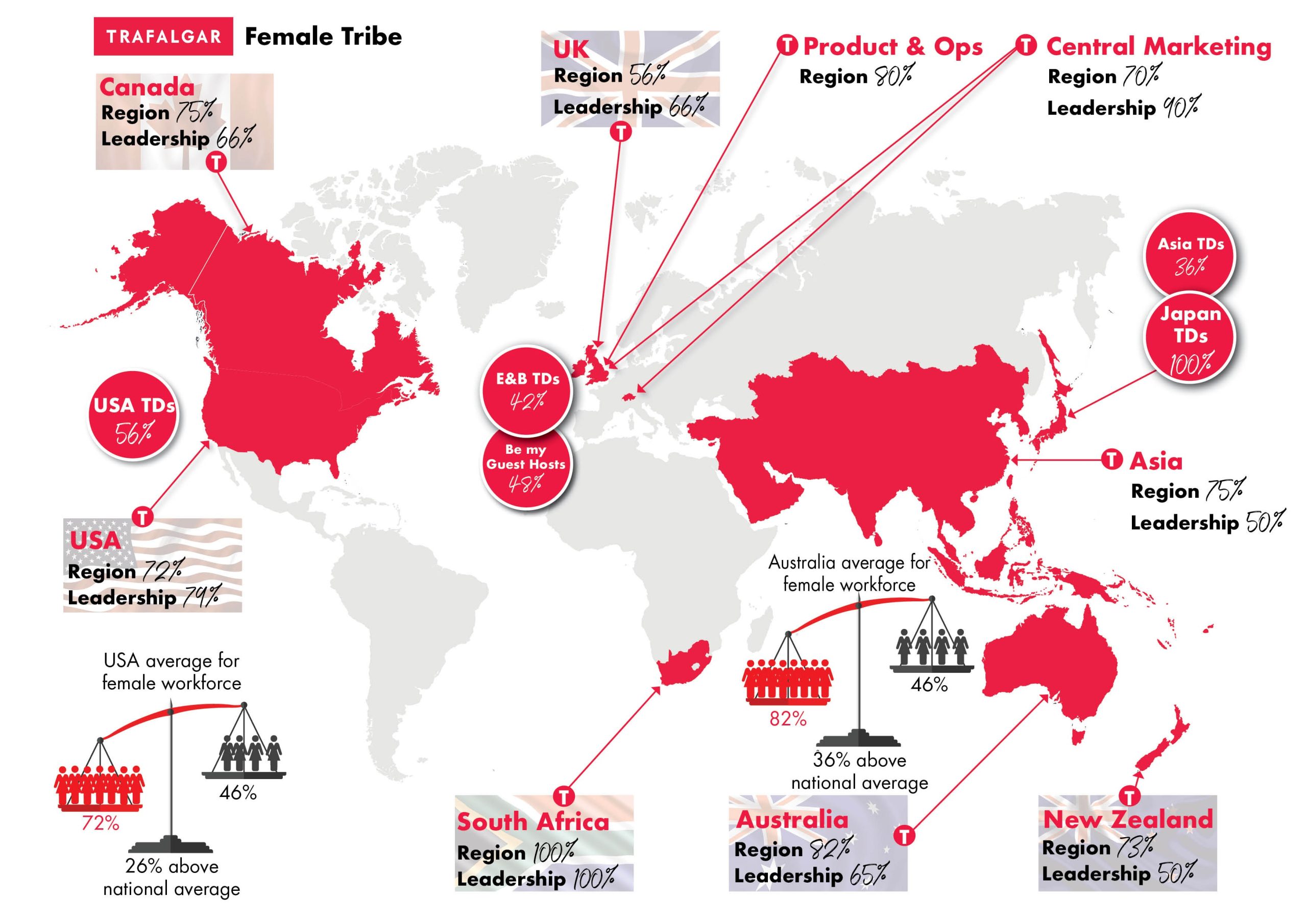
Saluting the exceptional power of women, especially in these exceptional times
A NEW CONNECTION | A NEW CONVERSATION, A SHARED EXPLORATION