

WHAT WE CHOOSE TO BECOME – THE ART OF THE POSSIBLE
One of the unexpected privileges of being at this stage of my life is the opportunity to stand still. To pause, listen and reflect. To step away from the continual demands of doing, and think back on what I’ve experienced, what I’ve absorbed and what I think, matters.
I’ve never imagined myself becoming philosophical. Much of my life has been dedicated to imagining possibilities, building businesses, bringing people together and making things happen. Yet experience brings perspective, and with it, a deeper understanding of human nature.
One of life’s revealing lessons is how differently people respond when circumstances change. Some respond with kindness, discretion and generosity of spirit. Others become consumed by their own expectations, assumptions or personal interests, frequently with little concern for those around them.
It is intriguing how quickly expectations can become entitlements, opinions convert into convictions, and personal interests alter to new principles. How easily we then are able to convince ourselves that what serves us must be right. And how rarely we then distinguish this in ourselves.
Much of what I have witnessed in life inspires me. Extraordinary kindness. Considered generosity. People who act with integrity when no one is watching. Those whose instinct is to give rather than take, whose success creates opportunities for others, and whose character reminds me of the goodness that exists in humanity.
But I also observe behaviour I find deeply troubling. People who bully, deceive, manipulate or diminish others in pursuit of their own needs and advantage. Those who exploit trust, use their position to intimidate, or assume that their interests matter more than the wellbeing of those around them.
I’ve never had any tolerance for bullies. I despise all they represent. Of course, bullying is not always loud or confrontational. It can also be subtle and premeditated. It can hide behind influence, privilege, position or the idea of knowing more than others. It is frequently less concerned with establishing what is right than with proclaiming superiority and exercising control.
Yet knowledge is not wisdom. Access is not authority. And possessing the means to diminish another person does not confer the right to do so. Too often, sympathy is mistaken for weakness, prudence for ignorance, and restraint an invitation to exert greater influence.
What I find particularly disturbing is how readily dubious behaviour becomes justified. True strength is not demonstrated by what we can impose upon others, but by having the power to act in our own interests and the character to recognise when we should not.
Human beings are oddly capable at constructing explanations for their actions. We find reasons, precedents and interpretations that make our choices appear reasonable, particularly when we stand to benefit from them. Self-interest becomes self-justification. And in the progression, conscience is forgotten.
There is an important distinction between human imperfection and the deliberate mistreatment of others. None of us is beyond making mistakes or exercising poor judgement. But when personal advantage consistently takes precedence over fairness, dependability and respect, we are meeting something more fundamental about character.
Moreover, there is a profound difference between what we have the right to do and what we know is right. We can win an argument and lose a friendship. Secure an advantage and sacrifice something more enduring. Trust, respect and the relationships that give our lives meaning. These are losses that no claim of entitlement can easily repair.
Self-interest is not the failing. Ambition and aspiration have inspired much of humanity’s progress. The failing comes when, in pursuing what we want, we lose sight of what our choices may cost others.
I personally remain intensely ambitious; excited by what is still to be imagined, created and achieved. But there is an enormous difference between drive that invents and ambition that consumes. Between wanting to succeed and requiring someone else to lose.
We recognise selfishness readily when we are the ones who bear its cost, yet are far less willingly when we are the ones who enjoy its rewards. And therein lies the true test of character. Not in how we judge the actions of others, but in whether we have the courage to hold ourselves to the same measure.
Which is why the principles we hold must also apply when they demand something of us. When fairness is inconvenient. When integrity requires us to surrender an advantage. When doing the right thing means accepting less than we could otherwise obtain. We cannot demand these qualities of others without being prepared to examine ourselves by the same standards. Character isn’t shown by the values we profess, but by the choices we make when these values are tested.This brings me to a distinction I regard as fundamental.
Doing well is not the same as living well.
Doing well is commonly measured by what we achieve, accumulate or control. Living well must also be measured by how we conduct ourselves, the people we take with us, the opportunities we create for others and the dignity with which we exercise the privileges life affords us.
I have been fortunate to know extraordinary people who understand this. Individuals who give without computing what they will receive in return. Who celebrate the success of others without feeling diminished. Who exercise authority with humility and understand that trust, relationships and shared purpose are worth more than personal advantage.
These are the people who inspire me. They demonstrate that generosity and ambition are not opposing forces. Indeed, ambition acquires far greater meaning when our own success creates opportunities for others.
This lies at the heart of a philosophy that has shaped much of my life – The Art of the Possible.
The extraordinary things that can emerge when imagination meets determination, when people join around a shared purpose, and when we have the courage to move into unchartered territory and build something that did not previously exist.
The power of possibility lies in what we are willing to share, rather than what we seek to preserve for ourselves. An idea becomes richer when others bring their imagination to it. An opportunity becomes more meaningful when it opens doors for someone else. And another person’s success becomes something to celebrate, rather than a measure against which to judge our own.
It is through this generosity of spirit that ambition finds a greater purpose. Trust deepens, individual talents become a collective strength, and what begins as one person’s vision grows into something greater than any individual could have imagined or achieved alone.
We do not diminish our own possibilities by enlarging those of others. We enrich them. I have witnessed this throughout my life, when people act with integrity, honour the trust placed in them and allow a shared purpose to matter more than individual recognition. It is in these moments that we discover the extraordinary potential of human nature, not simply in what we can achieve for ourselves, but in what we inspire and enable in one another. This is not naive idealism. It is the art of the possible, realised through the best of what we can be together.
Woefully, I have also witnessed what is lost when self-interest overwhelms everything else. Trust gives way to suspicion. Collaboration becomes calculation. Relationships become transactional, and loyalty becomes conditional upon personal advantage. The contributions of others are conveniently forgotten, principles are set aside, and entitlement becomes the justification for taking what was never rightfully theirs.
Someone may secure the advantage they sought, yet in doing so destroy something of greater value. The true cost of unchecked self-interest is not only what it takes from others, but everything it precludes from being created.
Turning the other cheek is not the answer to bullying, dishonesty or injustice. Silence can be its own form of permission, and avoiding confrontation because it is uncomfortable can leave others exposed to additional harm. There are moments when standing our ground, challenging wrongdoing and insisting upon accountability are responsibilities we cannot avoid. But moral courage is not measured by how long we remain in conflict.
We can challenge another person’s behaviour, but we cannot give them integrity. We can speak the truth but cannot control the stories others choose to tell or the conclusions they reach. And we can exhaust ourselves attempting to correct every misconception without changing a single mind.
There is a difference between defending our principles and allowing the conduct of others to dictate the direction of our lives. We can stand firmly for what is right, establish boundaries, withdraw our trust and close doors when necessary. Not out of bitterness, nor as an admission of defeat, but because certain behaviour has no place in the life we choose to lead.
Closing a door does not excuse what happened, nor does moving forward mean that accountability no longer matters. It is the recognition that we do not need to remain engaged in every conflict to remain true to our values. Our time, attention and energy are finite. Every moment spent revisiting what cannot be changed is a moment taken from what could still become possible.
There is strength in knowing when to stand firm, wisdom in knowing when to walk away, and freedom in refusing to let the behaviour of others determine what comes next. And ultimately, this brings us back to the art of the possible. To the people, relationships and opportunities that deserve our attention. To what we can still imagine, create and contribute, rather than what others may have chosen to diminish.
For the measure of our lives will never be found in the conflicts we have won, but in the principles we have upheld, the people we have helped and the possibilities we have made real. It means acknowledging that our time, attention and emotional energy are finite, and that continuing to invest them in destructive relationships, unnecessary conflict or the opinions of others comes at the expense of more meaningful possibilities. The greatest freedom is not having to win every battle. It is knowing which are worth fighting, which doors need closing and where our energy can make a meaningful difference.
Difficult experiences need not make us harder. They should make us clearer in our judgement. More discerning about whom we trust, the relationships we nurture, the principles we refuse to compromise and the behaviour we are prepared to tolerate. And there is no reason to allow the foulness of another person’s conduct to diminish our own capacity for generosity, kindness or joy.
We can recognise what is wrong, stand steadfastly against it and still refuse to let it define who we become. Life holds too much beauty and possibility to surrender either to those who choose to live otherwise.
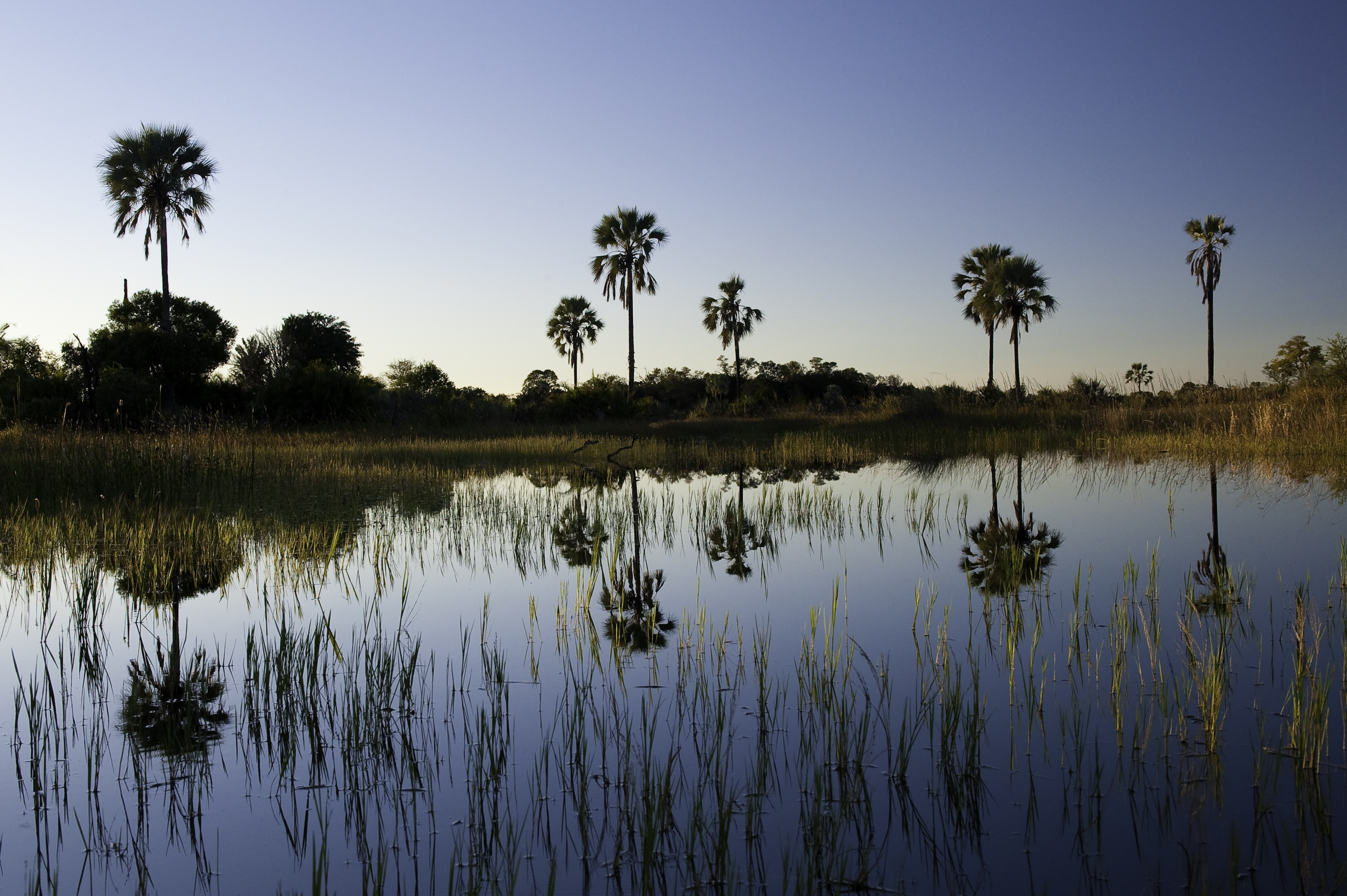
For me, nature has a remarkable way of restoring perspective. In the Alps, concerns that seem all-consuming become remarkably small against their vastness. In the Okavango Delta, the interconnectedness of life reminds us that nothing exists entirely for itself. Even the most powerful depend upon the world around them.
Importantly, nature is neither always gentle nor fair. But it teaches humility, perspective and the consequences of our actions. Above all, it reminds us that the privilege of possessing something is inseparable from the responsibility of caring for it. Whether that is land, a business, a relationship or the trust another person has placed in us.
We are living in an age of extraordinary change and possibility. Technology, knowledge and accelerating human ingenuity are expanding what we are capable of achieving. Yet greater know how does not necessarily carry greater wisdom. We can use our influence to build or diminish, to create opportunities or deny them to others, to exercise power responsibly or simply because we can.
What determines the difference is not the power we possess, but the character with which we exercise it. And therein lies our inflection point. Our future will be shaped not only by the extraordinary things humanity becomes capable of achieving, but by the values and conscience we bring to those possibilities.
The same holds true for our individual lives. We cannot determine the character of others, nor compel them to share our understanding of what is right. We can stand firmly against wrongdoing, recognise when trust has been lost and have the wisdom to leave behind what no longer deserves a place in our lives.
There is no virtue in allowing the worst of others to diminish the best within ourselves. And this once again brings us back to The Art of the Possible. The belief that ambition finds its greatest purpose when it extends beyond ourselves. That generosity and achievement can enrich one another. That the possibilities we create for others can be as meaningful as anything we accomplish for ourselves.
Actual progress is not simply about achieving more. It is about becoming better in the process. This is ultimately what it means to live well. To remain ambitious without losing our humanity, principled without becoming embittered, and conscious of the failings of others without surrendering our faith in the goodness of people.
For the measure of a life will not be found only in what we have acquired, achieved or controlled. It is seen in the trust we have honoured, the people we have cared for, the principles we have upheld and the possibilities we have made real.
We cannot choose the character of those around us. But we can choose our own. There is no greater freedom than to live by our own values, refuse to be diminished by those who do not share them, and devote ourselves to what is possible.
This is the life I choose.


